The Work of Hospitality
The essay below was first published in print in the winter issue (2025) of the Joie de Vivre Journal... and online on August 6, 2025.
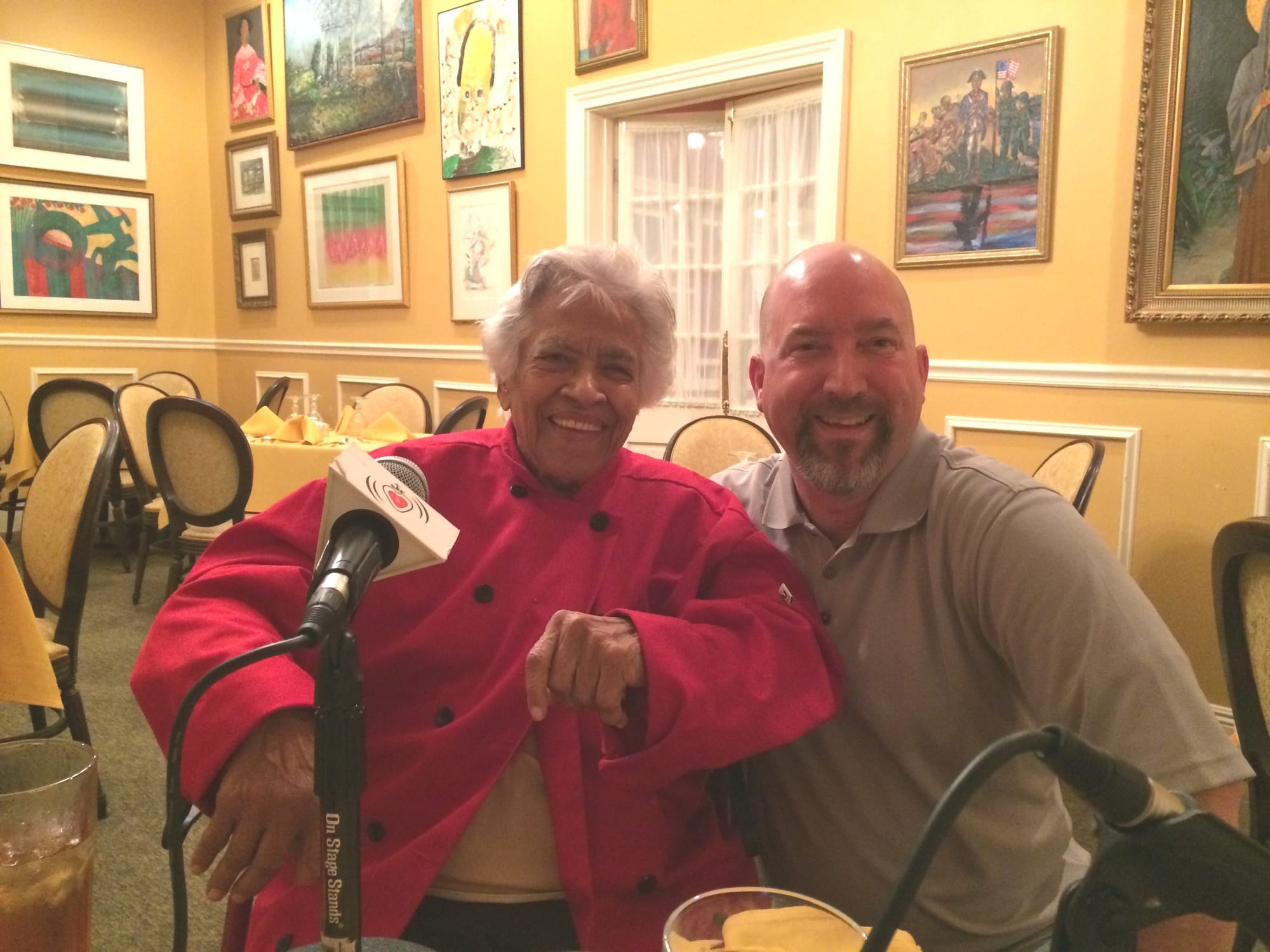
One Wednesday afternoon in early August 2014, I found myself at a table with Chef Leah Chase in her restaurant, Dooky Chase’s, in the heart of Treme. It was after the lunch rush had passed, and we sat at a white linen-draped table in the smaller dining room. Ice water in crystal goblets perspired in slow motion as we talked. I was there to interview “Miss Leah” for a radio segment. The segment was only 30 minutes. Yet, almost two hours later, we were still talking.
This woman—who, at the time, informed me she was 91 and a half years old—regaled me with stories of the countless celebrities and the plethora of presidents, prime ministers, and prelates she had hosted in her restaurant. Michael Jackson (and his brothers), Hank Aaron, Ray Charles, Ernest Gaines, and Quincy Jones were but a few of those famous patrons. Many of them were repeat guests, and some became friends. Presidents George W. Bush and Barack Obama both dined there. It was well known that President Bush would never come to New Orleans without first calling Miss Leah to make a reservation or to invite her to join him for dinner at another establishment. None of these esteemed guests came to marvel at the restaurant’s architecture or admire its decor, despite the fact that the restaurant was filled with cherished art that Miss Leah had collected over the years. They came for the food and to experience the heart of the chef who prepared it.
A central theme of our discussion that day was hospitality. At 91 and a half, Miss Leah could still recount to me what she served to whom and when from decades before. She told me that President Bush loved her Grits and Breakfast Shrimp and her Braised Quail with Plum Jelly. She told me that Michael Jackson loved her Sweet Potato Pie and that she would ship pies to him every year. Southern hospitality is well and good—and we should certainly cherish it—but as a Catholic, Miss Leah knew there was something more to it, something beyond what could be seen. A cradle Catholic, one of 13 children, born and raised in Madisonville, LA, Miss Leah innately understood the sacramental nature of hospitality. She loved people; that was her secret. And she truly believed that all the world’s problems could be solved around the table over a bowl of hot gumbo and a piece of fried chicken. Of course, somebody had to put in the work to make that gumbo and fry that chicken. That’s simply part of being hospitable. It’s part of living the gospel.
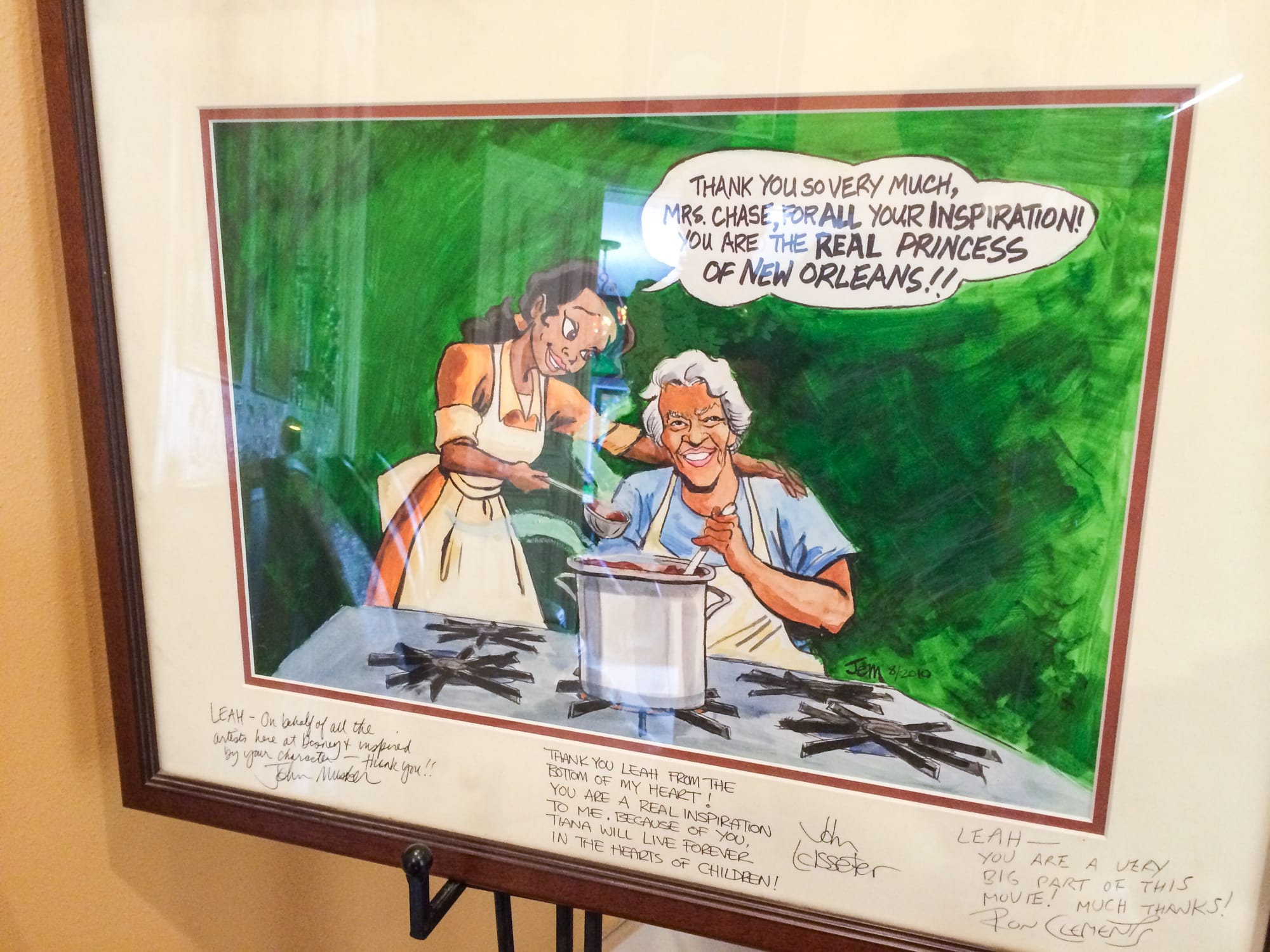
Sometimes living the gospel in this way—being hospitable and serving others—can seem to result in big, yet easy, blessings. For example, Miss Leah not only served royalty, but you could say that through her service, she became royalty. She was known the world over as the “Queen of Creole Cuisine.” And, beyond that, thanks to the magic of Disney, Miss Leah was “transformed” into royalty with the release of The Princess and the Frog in 2009. She was the inspiration behind Disney’s Princess Tiana.
But living a life of hospitality doesn’t always look and feel glamorous. A glance toward the life of Dorothy Day can give us another view entirely. Dorothy was a convert to Catholicism. Prior to her conversion at the age of 30, she lived a troublesome life. She was a college dropout, an activist concerned with the plight of the poor and the working class, and a journalist. She was deeply influenced by socialist and communist ideas, yet she never became a Communist. At one point, she had an abortion. She later lived with a man she truly loved. But he was an atheist who didn’t believe in marriage. She carried and gave birth to his child. It was during this pregnancy that her heart began to open to the Catholic Church. She had been on a search for a long time, restless and aware of a “presence,” despite being an atheist. She was, as she later described, “haunted by God.” Eventually, she left the man she loved to follow Christ and to become a member of the Church. This was the beginning of the Dorothy who—after her death at the age of 83—would be described by Fr. Daniel Berrigan, SJ, as a woman who “lived as if the gospel were true.” –Read the rest at Joie de Vivre Journal.
